Applications
Organized by roof type, because that is how the job comes in.
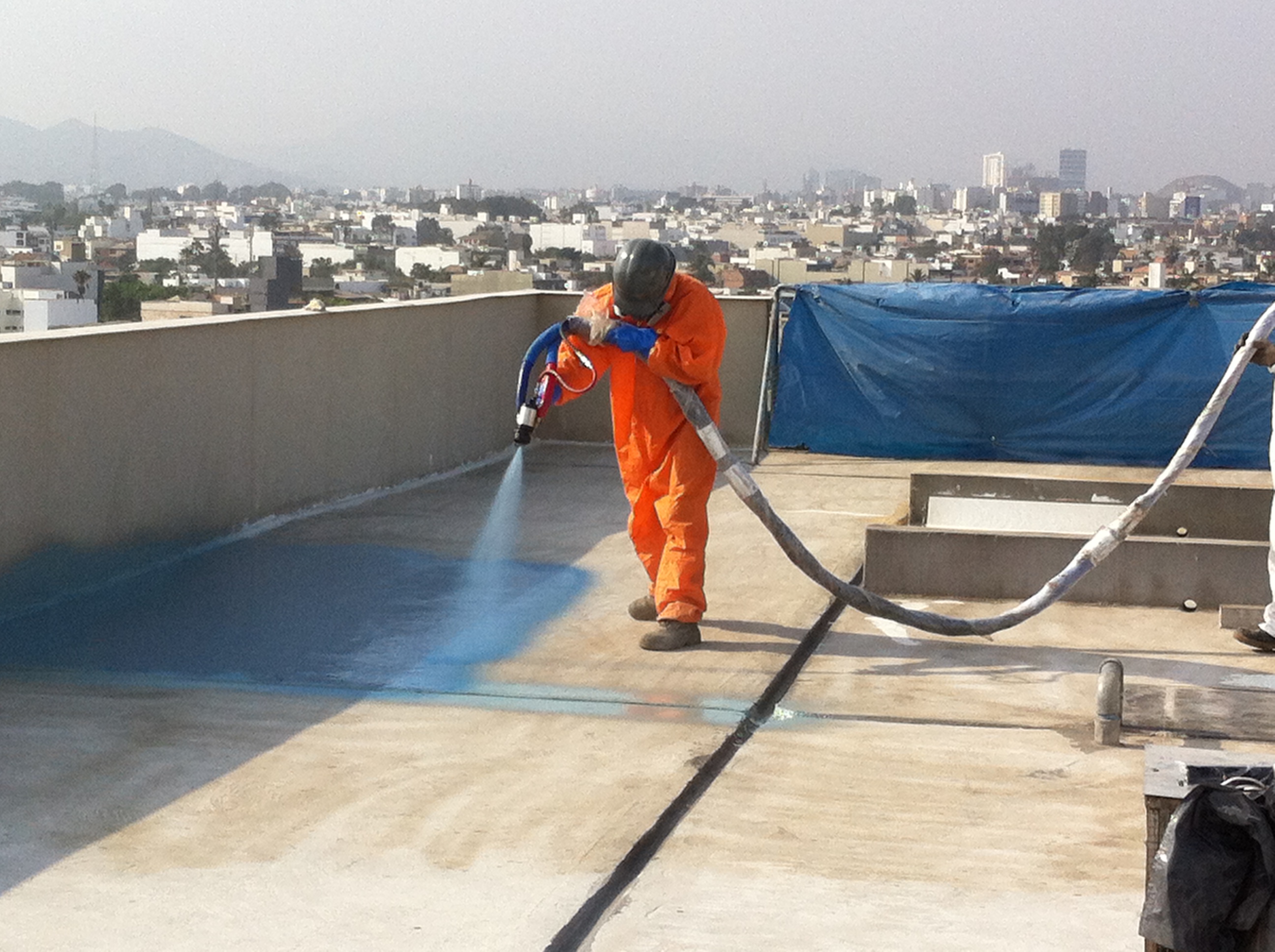
Standing Seam & R-Panel Metal Roofs
Metal roofs do not usually fail because the panel wore out. They fail because the panel moves. Thermal cycling expands and contracts a long panel run every single day, working the fasteners loose and opening the laps a fraction at a time.
Once water is traveling under a panel, it corrodes from the inside where nobody can see it and nothing can be painted. By the time it shows up on a ceiling tile, there is often more damage above the deck than below it.
Spraying the roof as one membrane closes every lap and every fastener head simultaneously, and the elastomer flexes with the panel instead of cracking as it moves.
Spec: degrease and remove loose oxidation and white rust · 7001 Primer full field with laps and fastener heads double-coated · OR-80SLM at 40–60 mil DFT, or FJ1 at 60–80 mil in hail-exposed regions.
Low-Slope Commercial — TPO, EPDM & Modified Bitumen
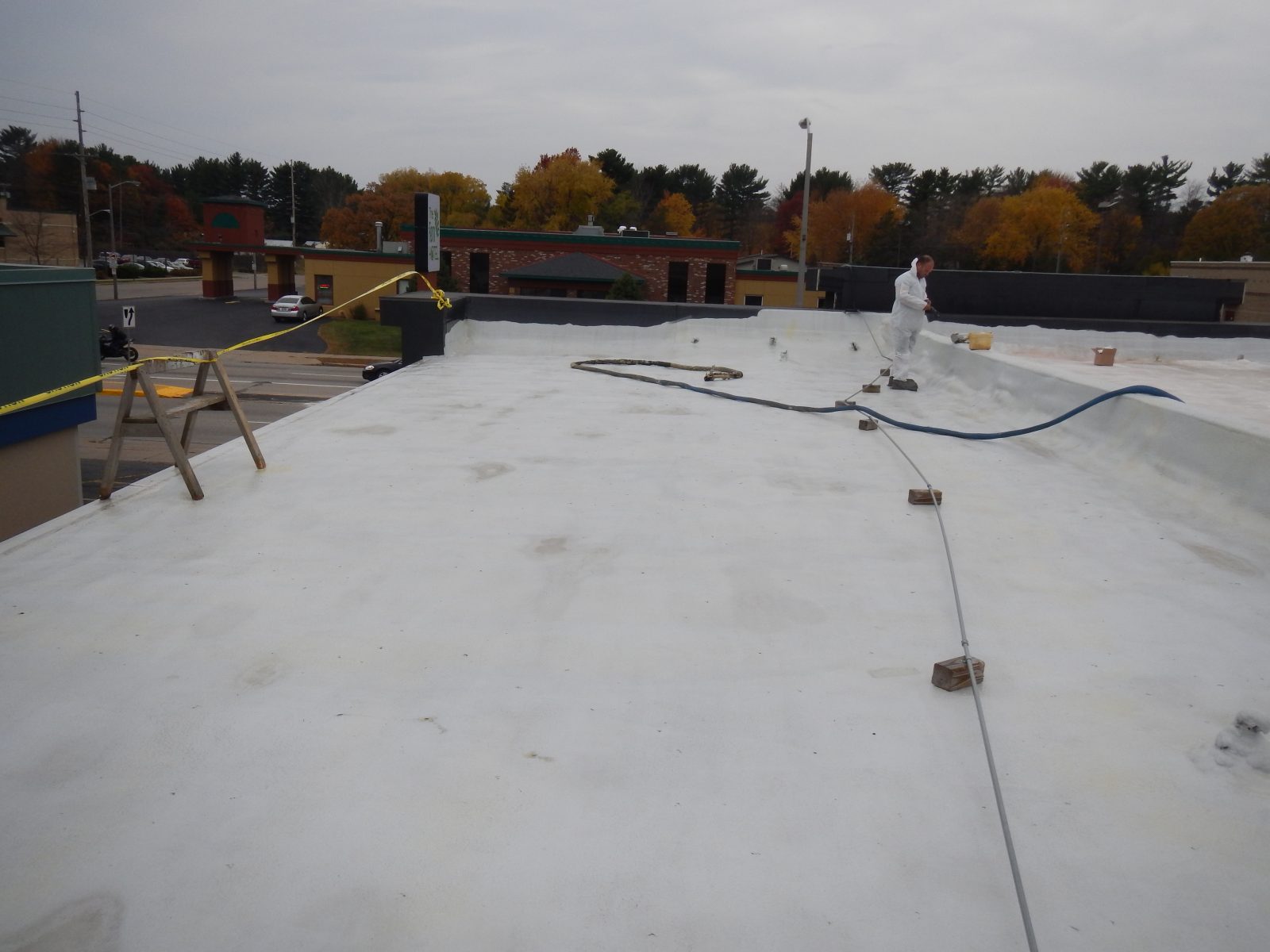
The restoration market, and the largest commercial opportunity in the line. An aging single-ply roof is typically watertight in the field and failing at seams, flashings, and penetrations — a repair problem masquerading as a replacement problem.
7001 Primer bonds the membrane to a substrate that would otherwise reject it, and OR-80SLM goes over the top as one continuous sheet, up every curb and into every drain.
Where the roof ponds or the building is under-insulated, roofing foam goes down first and tapers the drainage correctly — something no board or membrane product does without an expensive custom taper package.
Spec: pressure wash and dry · repair open seams and failed flashings · test patch and pull test · 7001 Primer full field and details · foam 1–1.5" tapered if required · OR-80SLM at 40–60 mil DFT.
Agricultural Storage & Barn Roofs
Farm roofs get judged by a different standard: they have to protect a crop worth more than the building, in a corrosive environment, on a schedule set by harvest rather than by a contractor.
Potato and onion storage, grain buildings, and machine sheds all share the same failure pattern — corroded fastener holes, opened laps, and condensation off the underside of the deck rusting the panel from behind.
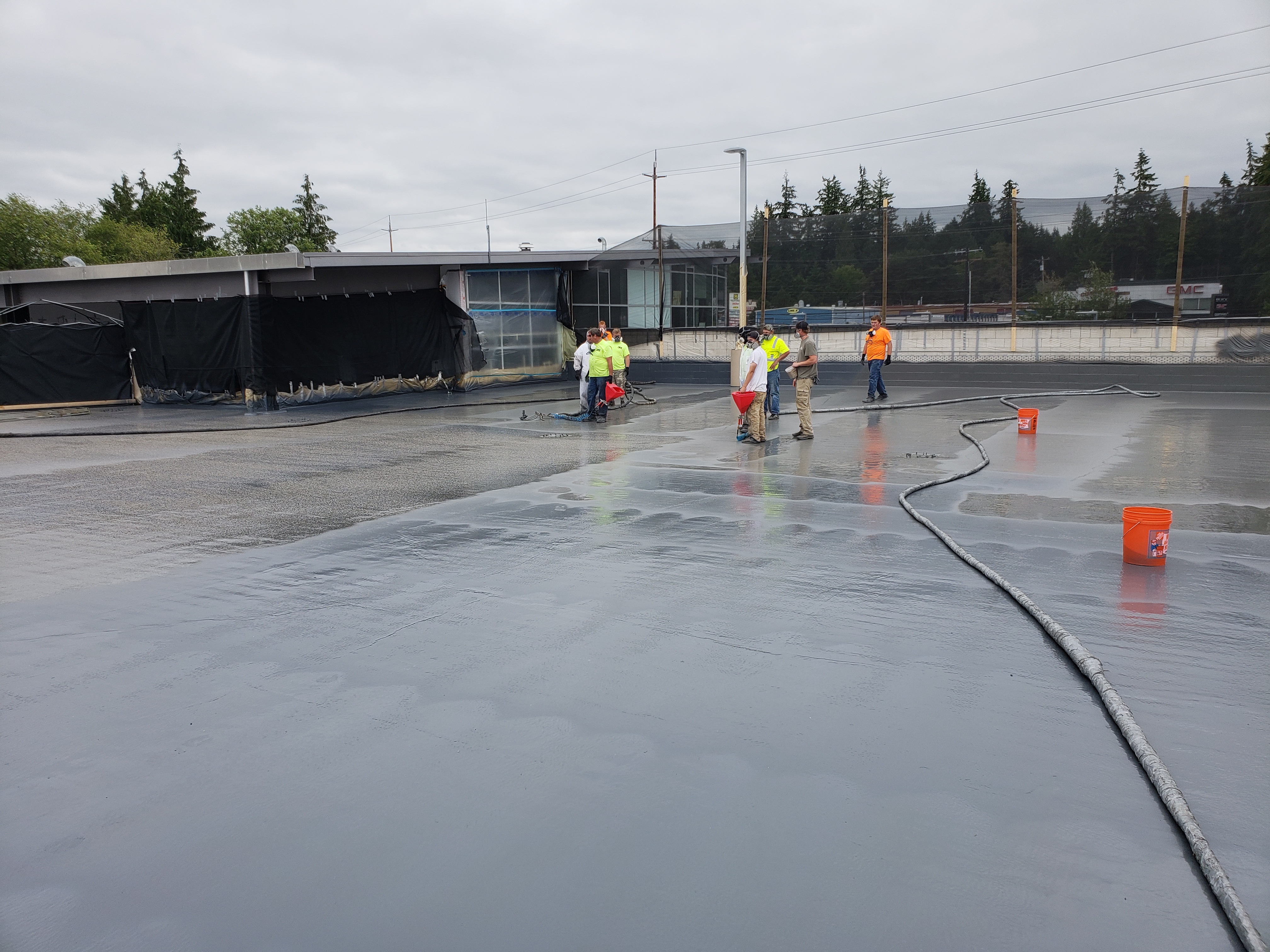
A sprayed membrane on top closes the fasteners and laps. Closed-cell foam underneath removes the condensing surface. Most ag buildings that get one eventually get both, and it makes sense to price them together.
Spec: 7001 Primer over degreased panel with laps and fasteners double-coated · OR-80SLM at 40–60 mil DFT on the exterior · closed-cell foam at 2–3" on the underside where condensation control is required.
Poultry, Dairy & Livestock Buildings
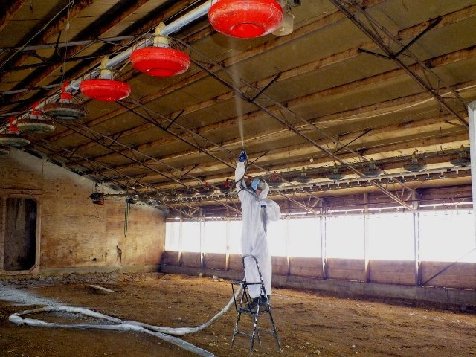
Livestock buildings combine everything that destroys a roof: ammonia in the air, sustained high humidity, aggressive wash-down, and a deck that condenses continuously because it is the coldest surface over a warm, wet space.
Conventional coatings do not survive this environment, and the failure is not gradual — the fasteners corrode through, the panel perforates, and suddenly the building is not weathertight in the middle of a production cycle.
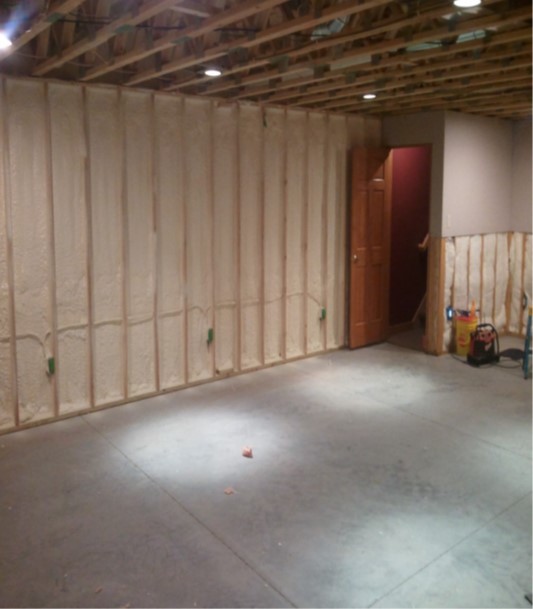
A seamless polyurea membrane can be washed aggressively without film failure and has no seams for biological growth to establish in. Coating the exterior and foaming the interior addresses corrosion and condensation as one project.
Spec: 7001 Primer over cleaned panel · OR-80SLM at 40–60 mil DFT exterior · closed-cell foam at 2–3" on the deck underside · coat any exposed interior foam subject to wash-down.
RV, Camper & Trailer Roofs
The retail side of the roof line, and a steady one — the RV fleet is enormous, the original roofs have a known service life, and a water-damaged laminated roof is a five-figure rebuild that a several-hundred-dollar membrane would have prevented.
The problem is always sealant. Every vent, AC unit, antenna, skylight, and roof edge is sealed with a product that has to survive constant flex and 150-degree thermal swings, and it does not survive them indefinitely.
Alasta Seal replaces that entire system of joints with one continuous membrane wrapped over every penetration. For dealers and service centers this is a high-margin service on a unit that is already in the shop.
Spec: clean and dry the deck · repair any soft or delaminated areas before coating · 7001 Primer full surface · Alasta Seal continuous, wrapped at all edges and penetrations.
Also Regularly Specified
- Pole barns and metal garages — roof and walls, inside and out
- Residential metal and porch roofs — including low-slope additions that shingles cannot handle
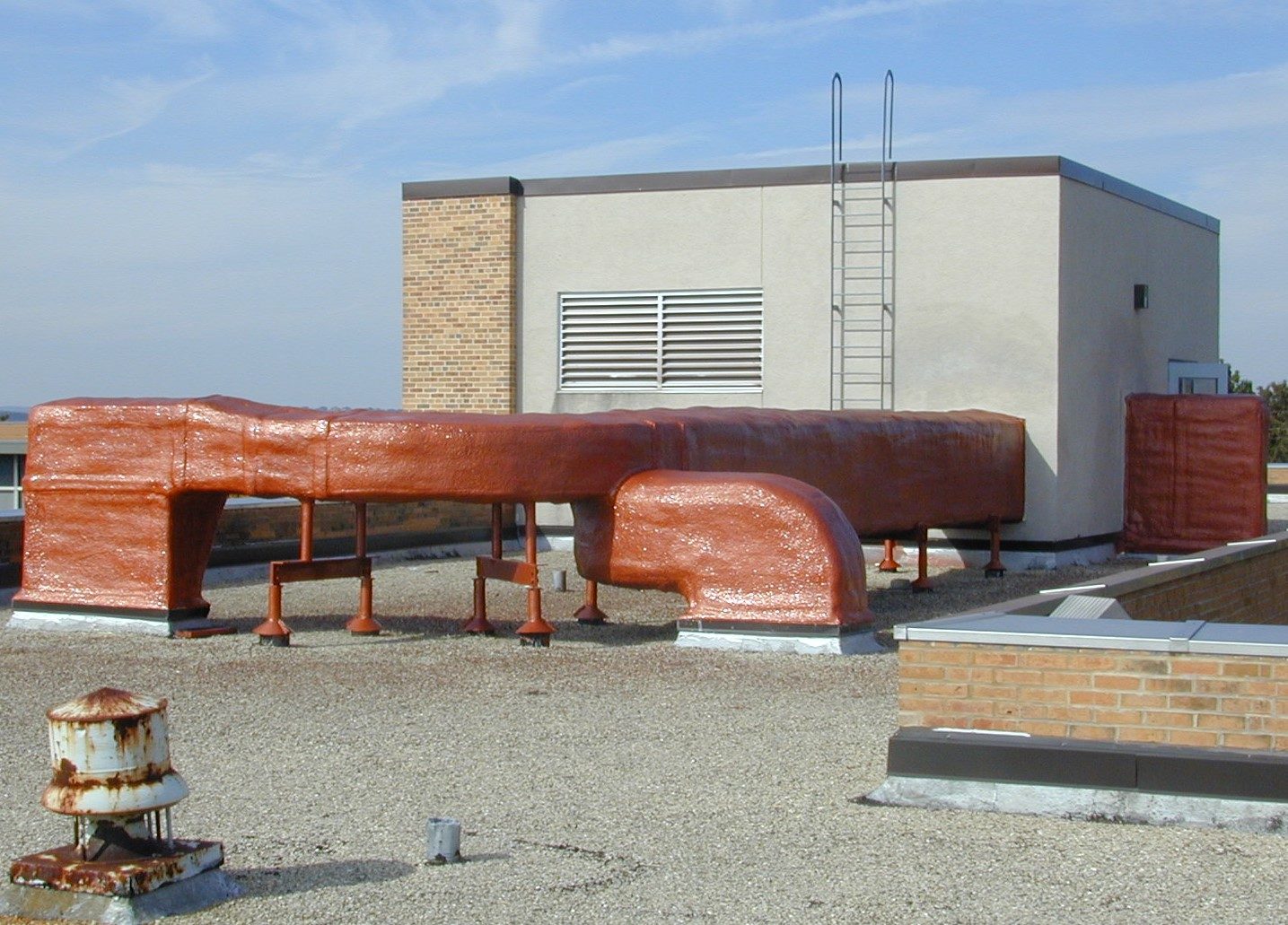
- Rooftop mechanical curbs and equipment platforms — FJ1 where they get walked
- Parapets, copings, and scuppers — the details that leak on every other system
- Balconies, walkways, and mezzanine decks — waterproofed with non-slip broadcast
- Cold storage and cooler roofs — coating on top, foam underneath
- Shipping container and modular building roofs — condensation and seam control
- Horse and equipment trailers — Alasta Seal on the roof, FJ1 on the deck
- Grain bin roofs and drying structures — corrosion and seam sealing
Have a Roof to Spec?
Deck type, existing membrane, square footage, and what it is doing wrong. Photos of the details help most.
Get a Roof SpecGet Roofing System Pricing
Tell us about your project and we will follow up with product details, technical data sheets, and pricing.