Roofing Systems
What each product is for, and how the assembly goes together.
Request Technical Data SheetsWhy Polyurea on a Roof
Polyurea is a plural-component, 100%-solids elastomer. The two sides mix at the gun, react on the substrate within seconds, and build a monolithic film with no solvent to evaporate and therefore no shrinkage — the wet mils you spray are the dry mils you keep.
On a roof, three properties matter more than the rest:
Elongation. At 300–400%, the membrane moves with a deck that expands, contracts, and deflects. Metal roofs in particular move a great deal seasonally, and a rigid coating on a moving deck cracks at exactly the ribs and fasteners you needed it to seal.
Set speed. Tack-free in seconds means the roof is shedding water almost immediately. A crew can spray a section and not lose it to an afternoon thunderstorm, which changes what is possible on a schedule.
Full adhesion. Bonded across the entire area rather than fastened or ballasted. Nothing to billow, nothing for wind to catch, and a leak that does occur cannot travel laterally under the membrane looking for somewhere to show up inside.
One caution, stated plainly: aromatic polyurea chalks in UV. It is cosmetic and does not affect waterproofing or physical properties, but where long-term appearance matters, specify an aliphatic topcoat and we will include it.
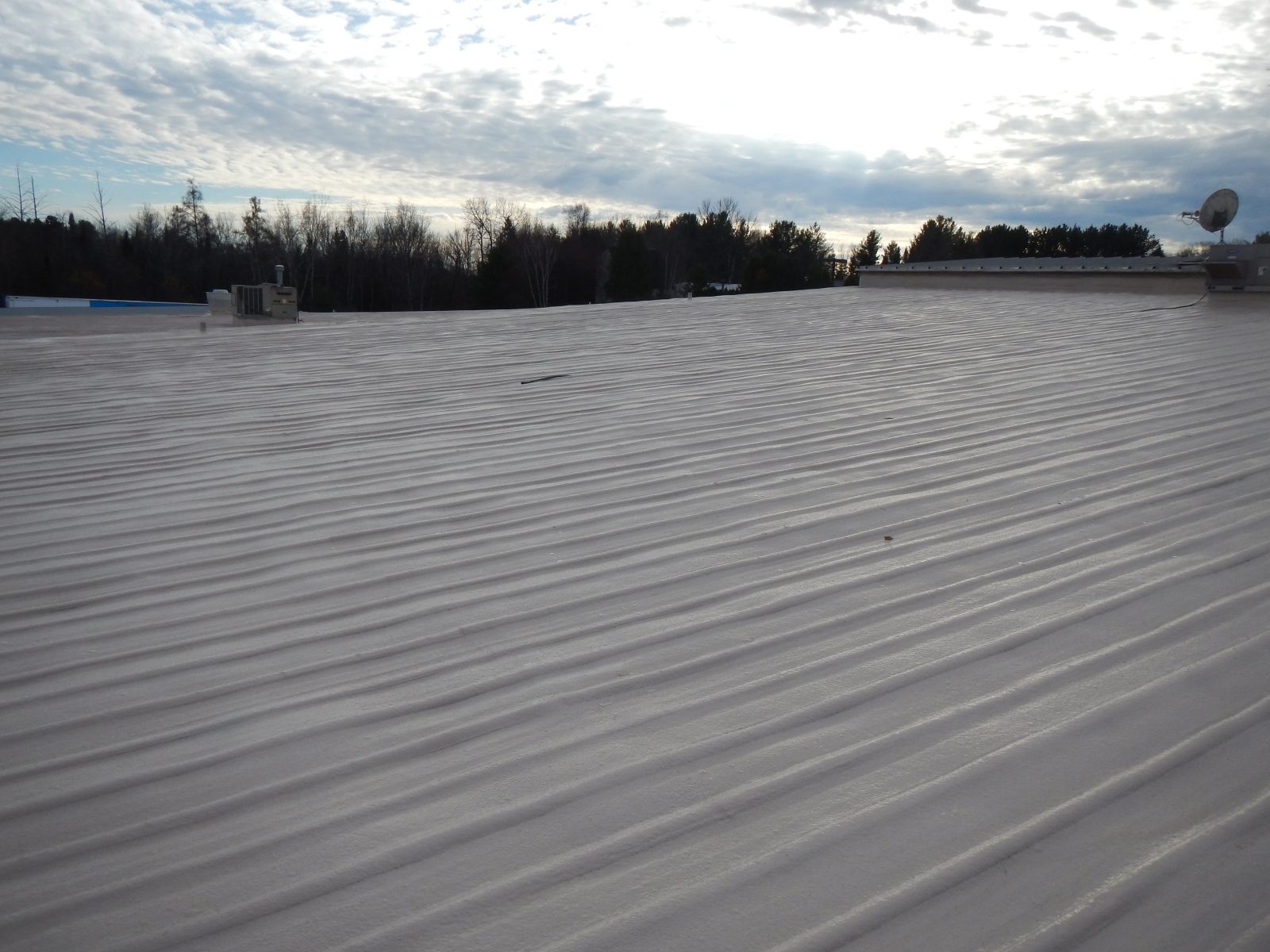
OR-80SLM Silver Lining Membrane
The flagship of the line and the product most WatchGuard Roof work is built around. A pure polyurea roof membrane carrying Miami-Dade approval — the hurricane-zone standard that specifiers, building officials, and insurance carriers ask about before anything else.
It sprays over prepared metal, over roofing foam, and — with 7001 Primer — over existing single-ply and modified bitumen. It wraps curbs, pipe boots, drains, scuppers, and parapet terminations as one continuous piece, which means the details that leak on every other roof system are simply not present.
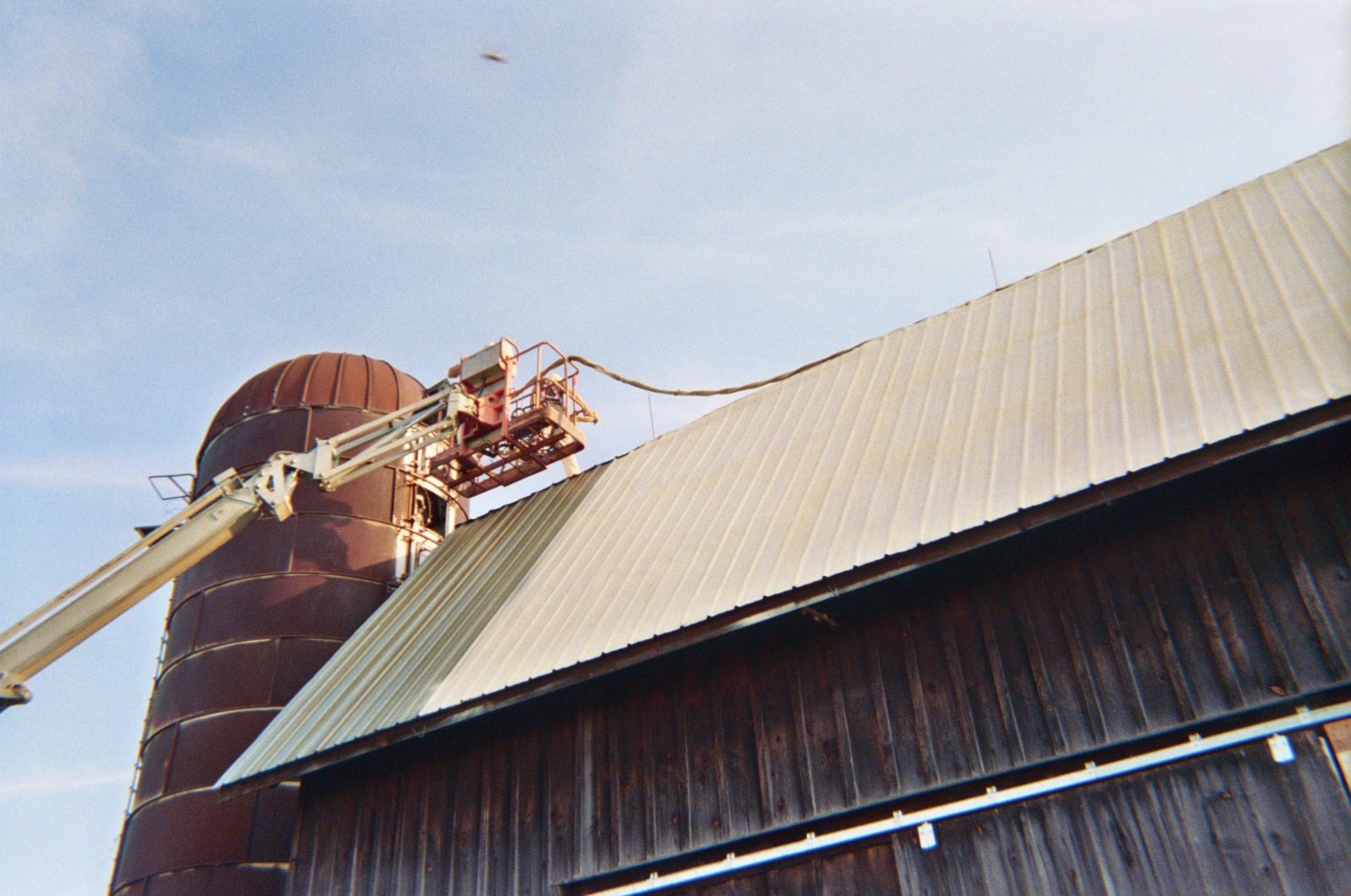
Where it is specified: low-slope commercial, standing seam and R-panel metal, TPO and EPDM restoration, agricultural storage and livestock buildings, and any roof where wind uplift is a design consideration.
Spec: 40–60 mil DFT over 7001-primed substrate; carried continuously up all curbs and terminations; aliphatic topcoat where long-term appearance is specified.
FJ1 — When Hail and Foot Traffic Are the Design Load
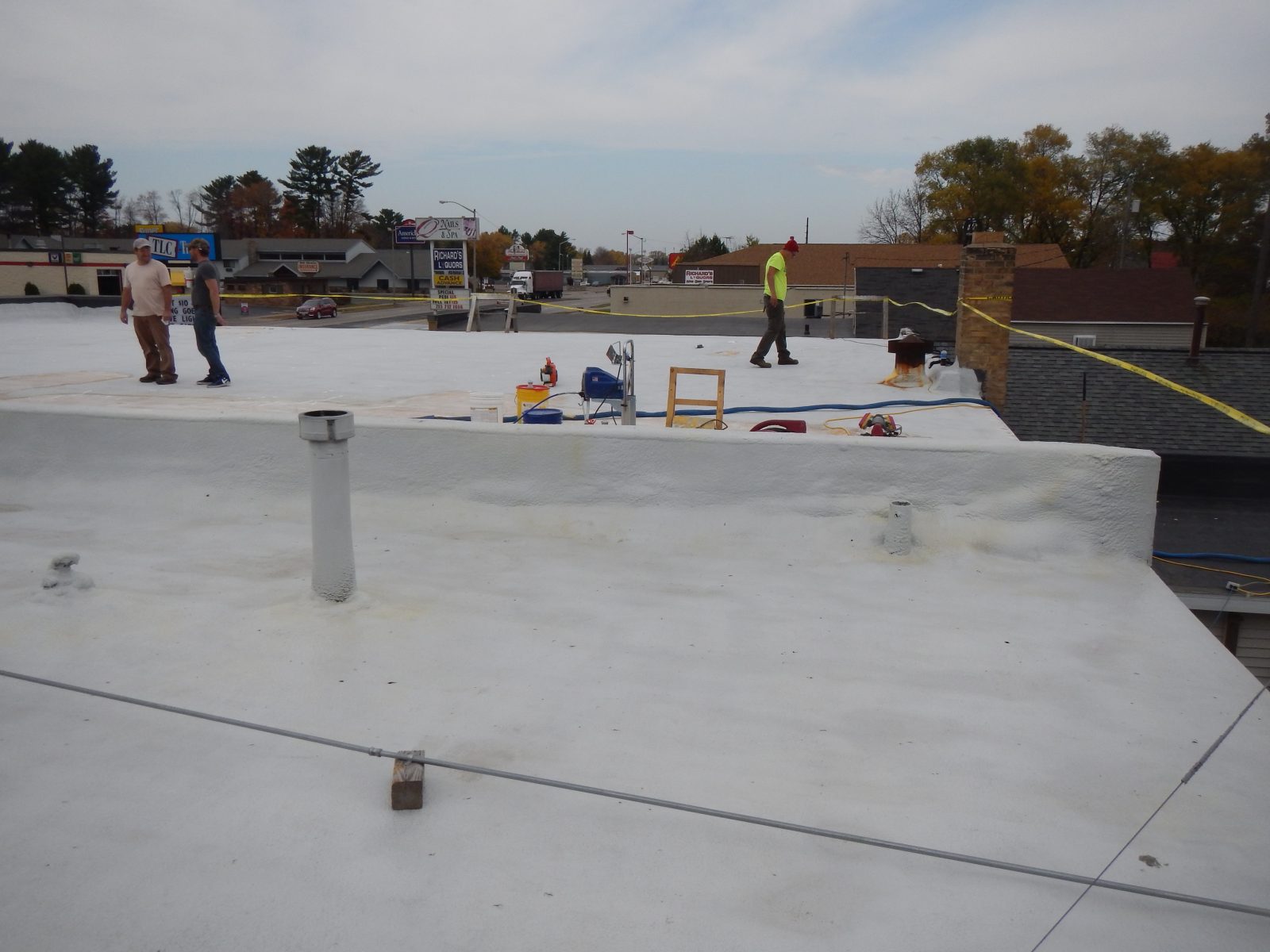
In hail country the failure mode is not water intrusion — it is impact. A hailstorm that dents panel is survivable; one that fractures a brittle coating opens hundreds of points for water to get under it at once.
Flak Jacket 1 is a higher-build polyurea with greater tear strength than the standard membrane. It absorbs impact energy and keeps its integrity where a thinner, harder film would craze.
It is also the right call on roofs that get walked regularly — around rooftop mechanical units, along service paths, and on walkable decks and mezzanine roofs where the membrane is being used as a surface rather than just a barrier.
Spec: FJ1 at 60–80 mil DFT over 7001-primed substrate, either across the full field in high-hail regions or as a reinforced band along traffic paths and around equipment.
Alasta Seal — RV, Camper & Trailer Roofs
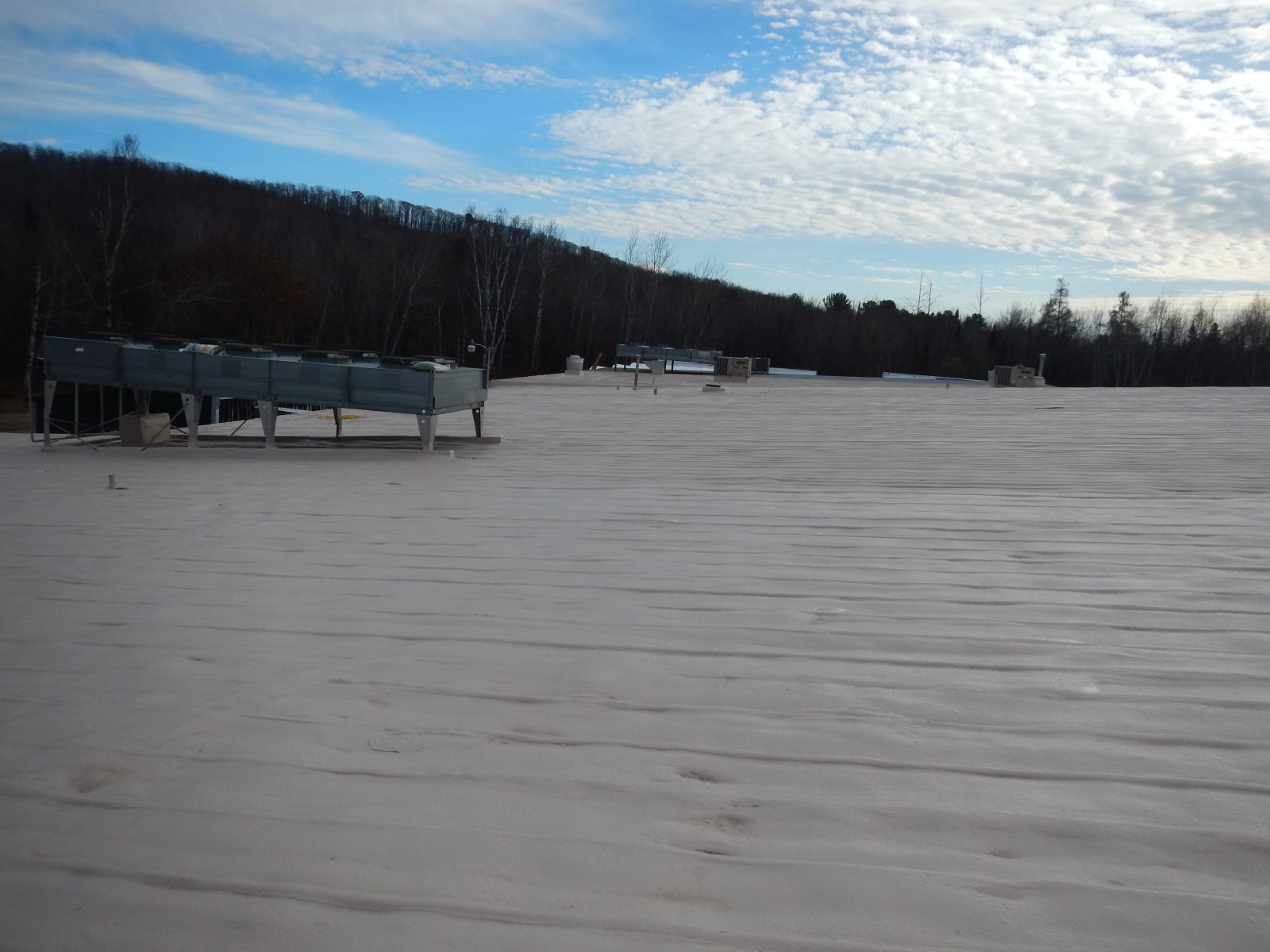
A vehicle roof is a structural problem disguised as a roofing problem. It twists over every uneven road surface, it goes from −10°F overnight to 140°F on a summer afternoon, and it does all of this at seventy miles an hour with wind load on top.
The original EPDM or TPO roof on most RVs is joined and sealed at every seam, edge, and rooftop appliance, and those sealants are the single largest source of water damage in the industry. Once water gets into the laminated roof structure, the repair is not a roof repair — it is a rebuild.
Alasta Seal is a flexible polyurea membrane formulated for exactly this service: enough elongation to live with continuous flexing and enormous thermal cycling, sprayed continuously across the full deck and wrapped around every vent, AC unit, antenna, and skylight so there are no sealant joints left to fail.
Spec: clean, dry, and repair the existing deck · 7001 Primer over the full surface · Alasta Seal continuous across the deck, wrapped at all edges and penetrations.
Roofing Foam — When the Roof Needs Slope and R-Value
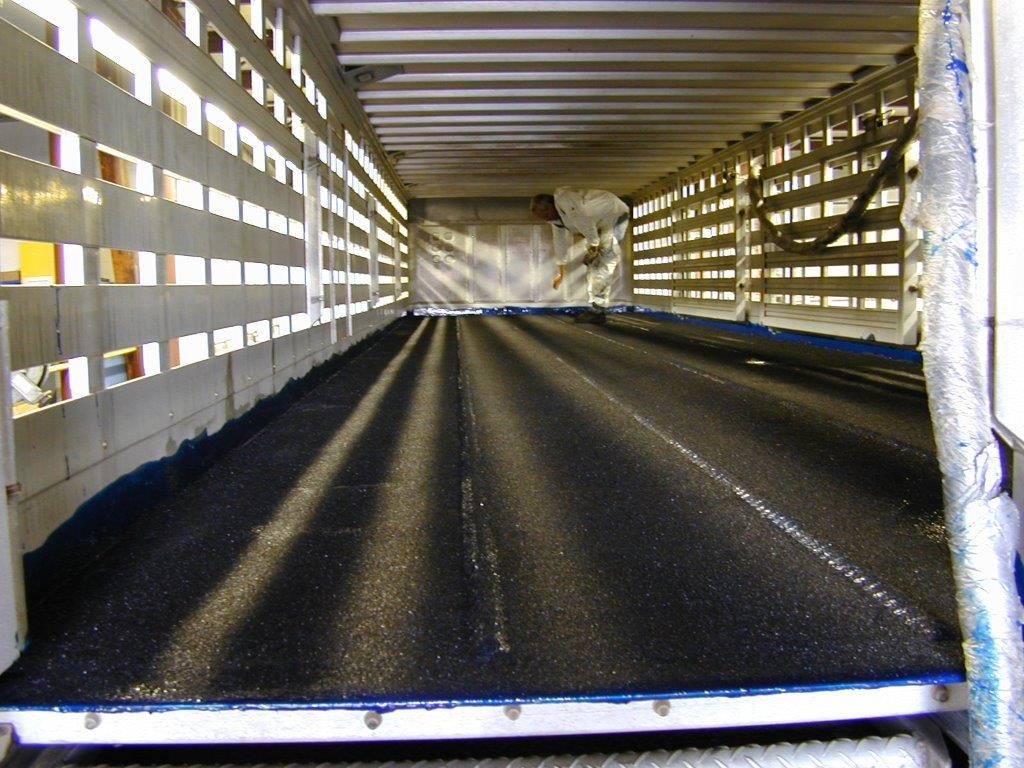
Membrane alone fixes leaks. It does not fix ponding, and it does not insulate. Where the roof has drainage problems or the building needs continuous insulation, roofing-grade spray foam goes down first.
Foam is the only roofing insulation that can be applied thicker at low spots and tapered toward drains without a custom-cut board package. On a roof that ponds — which is most older low-slope roofs — that is the difference between fixing the problem and covering it up.
It also gives continuous insulation with no thermal bridging at fasteners, because there are no fasteners, and it produces a fully adhered monolithic substrate for the membrane to be sprayed onto.
Spec: prepare and dry the deck · roofing-grade closed-cell foam at 1–1.5" nominal, tapered for positive drainage · OR-80SLM at 40–60 mil DFT, same day where conditions allow. Foam is not UV stable and must never be left uncoated.
System Selection & Build Specs
| Property | Value |
|---|---|
| Low-slope commercial, sound deck | 7001 Primer + OR-80SLM at 40–60 mil |
| Low-slope with ponding or no insulation | Foam 1–1.5" tapered + OR-80SLM at 40–60 mil |
| Standing seam / R-panel metal | 7001 Primer, laps and fasteners double-coated + OR-80SLM |
| Metal roof, high-hail region | 7001 Primer + FJ1 at 60–80 mil |
| TPO / EPDM restoration | Clean, test patch, 7001 Primer + OR-80SLM at 40–60 mil |
| Modified bitumen / BUR | 7001 Primer for bleed-through control + OR-80SLM |
| RV / camper / trailer | 7001 Primer + Alasta Seal, continuous and wrapped |
| Walkable roof / service paths | FJ1 at 60–80 mil in traffic areas |
| Membrane properties | 100% solids, 300–400% elongation, tear 400–500 pli |
| Service temperature | −40°F to 250°F |
| Coverage basis | 1,604 mil-sq-ft per gallon at 100% solids |
| Equipment | Plural-component proportioner with heated hose |
| UV note | Aromatic chalks cosmetically; aliphatic topcoat available |
Preparation — the Part That Decides Everything
Clean, and mean it. Chalked surface polymer, atmospheric dirt, and biological growth are all bond breakers. Pressure wash with an appropriate cleaner, rinse thoroughly, and let it dry completely. Moisture trapped under a coating becomes a blister.
Test the substrate before you bid it. On weathered single-ply or an unidentified previous coating, prime a small area, topcoat it with the real product, cure it, and pull it. If it releases cleanly at the interface, stop and call us. This costs ten minutes and has saved a lot of roofs.
Fix the deck first. Wet insulation, failed fasteners, rotted blocking, and open seams are substrate defects. A membrane bonds a coating to a roof — it does not reattach a roof that has already released from its deck.
Prime the details harder than the field. Panel laps, fastener heads, curb corners, and drain surrounds are where spray passes naturally thin out and where every failure investigation ends up looking.
Watch substrate temperature and dew point, not air temperature. A metal deck lags ambient by hours in both directions.
Need the Full Documentation?
Technical data sheets, safety data sheets, the Miami-Dade approval documentation, and application guides.
Request DocumentationGet Roofing System Pricing
Tell us about your project and we will follow up with product details, technical data sheets, and pricing.